

Workers' Compensation for Nurses & Healthcare Workers QLD
Nurses and healthcare workers care for others while managing demanding physical, emotional, and roster pressures. Patient care, shift work, fatigue, manual tasks, and urgent movement can all increase the risk of workplace injury. WT Compensation Lawyers practices workplace injury law in Queensland.

 80 Reviews
Workplace Injury Law Information for Healthcare Workers
Handling next steps after a workplace injury can be harder when you’re working around irregular shifts, nights, overtime, or agency work.
WT Compensation Lawyers can help healthcare workers across Brisbane, Cairns, the Gold Coast, Deception Bay, Logan, Ipswich, and other Queensland locations. No Win, No Fee is available in some matters.
Experience in Queensland Workers' Compensation Law
We have experience in workers’ compensation Queensland matters, which are governed by the Workers’ Compensation and Rehabilitation Act 2003 (QLD). We’ve also worked on matters involving workplace safety duties under the Work Health and Safety Act 2011 (QLD).
A Practical Approach for Time-Poor Healthcare Workers
We understand that nurses and healthcare workers often work across hospitals, nursing homes, aged care facilities, clinics, community care settings, and agency placements. Casual, agency, labour hire, and multi-site work can add extra reporting steps.
A legal team can help organise documents, explain the legal procedure, and identify which pathway may apply.
No Win, No Fee Available in Some Matters
We offer No Win, No Fee in some matters, with no upfront fees. Clients receive at least 50% of any settlement after legal costs and statutory refunds are deducted, where the rule applies.
We explain fee arrangements, outlays, and conditions before work begins so there are no surprises.
Our Team for Workers Compensation Matters
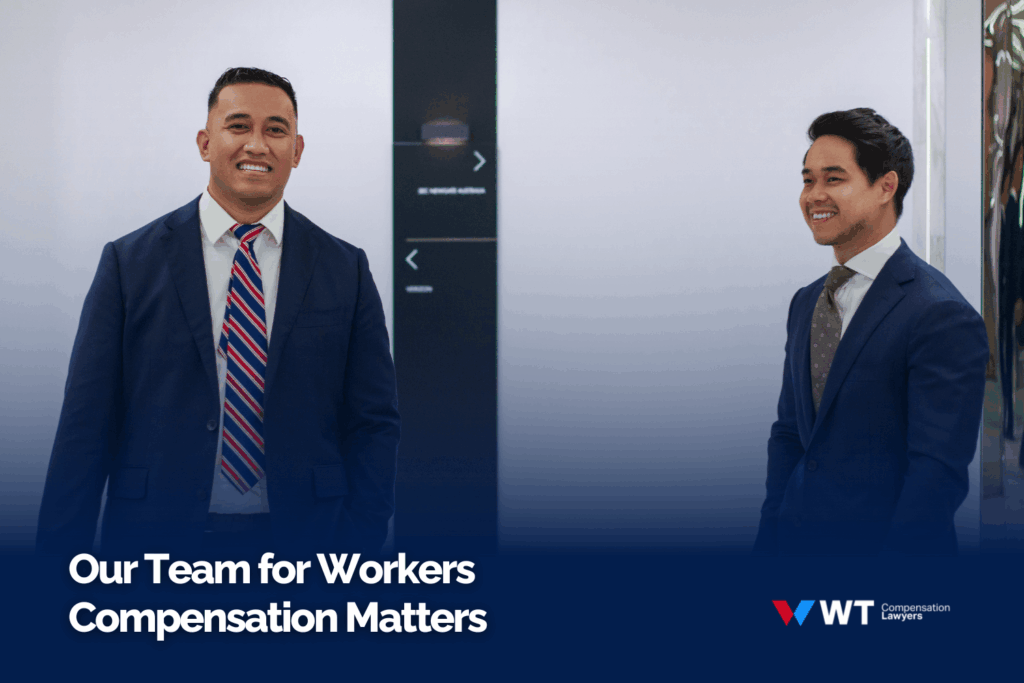
WT Compensation Lawyers is a 100% locally run Queensland firm. Our founders, Jonathan Wu and Sinaumea Taufao, have experience with Queensland legal procedures, insurer communication, and workplace injury matters. WT Compensation Lawyers is also a Queensland Law Society member.
Important Time Limits for Workers Compensation Matters in Queensland


Workers’ compensation matters have strict timeframes that may differ depending on the injury, employer type, and legal pathway.
Timing may also depend on when the injury was reported, when a doctor connected the condition to work, and whether WorkCover Queensland or a self-insured employer is involved.
A nurse or healthcare worker should report the injury to the employer as soon as possible. This may involve a hospital incident report, an internal reporting system, a supervisor’s email, or a workplace health and safety record.
Medical assessment helps document the injury, symptoms, and connection to work duties. Healthcare workers should explain the task, shift, ward, resident care duty, or incident that caused or contributed to the condition.
A workers’ compensation medical certificate records work capacity and treatment needs. It may affect weekly payments, treatment approvals, and return-to-work planning.
Some healthcare employers use WorkCover Queensland, while others may be self-insured. Queensland Health and some large healthcare organisations may also have internal reporting procedures. Workers should keep copies of any forms submitted.
Seeking Legal Advice: What if You’ve Suffered an Injury or Illness In a Healthcare Environment?
If you’ve been injured in a healthcare environment during work, the first step is to get medical attention. A legal practitioner may offer advice about your legal rights in your specific situation.
Your Rights Under Queensland Workers’ Compensation Law
Nurses’ workers’ compensation matters may involve a statutory claim, a common law claim, or a Whole Person Impairment (WPI) assessment. Each pathway has a different role.
A statutory claim is usually the first WorkCover Queensland pathway. It may deal with treatment costs, weekly payments, rehabilitation, and return-to-work support.
Fault rarely needs to be proven for a statutory WorkCover claim. The focus is on the injury, the work connection, and the medical evidence.
A common law claim is a separate legal pathway that may apply when employer negligence is alleged. This pathway involves different legal tests and evidence.
Issues may include unsafe systems of work, inadequate staffing, insufficient training, unsafe equipment, unmanaged occupational violence risks, or failures in patient handling procedures. Legal advice is important before accepting a lump sum offer, as this can affect later options.
A Whole Person Impairment (WPI) assessment measures permanent impairment after an injury stabilises. It can affect the options available after a statutory claim.
WT Compensation Lawyers provides information about Whole Person Impairment assessments for workers who need to understand how WPI fits into the legal procedure.

Legal Procedure in Queensland for Work-Related Injury or Illness
The first step is understanding the work setting, injury history, employer type, and any existing WorkCover documents. This may include reviewing rosters, work capacity certificates, incident reports, correspondence, and medical notes.
Medical and witness records that may be relevant to the matter. These may include:
- Incident reports
- Code Black or security logs where relevant
- Rosters and shift records
- Training and competency records
- Maintenance records
- Medical reports
- Work capacity certificates
An experienced legal team can assist with correspondence involving WorkCover Queensland, self-insured employers, or other parties.
Some matters involve reviews, insurer decisions, conferences, or court procedures. The team can provide legal services through these steps, where required.
Common Workplace Injuries for Nurses and Healthcare Workers
Healthcare settings can involve patient handling, urgent movement, sharps, fatigue, workplace aggression, and exposure to distressing events. Injuries may happen in one incident or develop over time.
Common injury types include musculoskeletal injury, manual handling injury, back injury nursing matters, shoulder injury nursing matters, fatigue-related injury, and psychological injury healthcare worker matters.

Manual Handling and Patient-Lifting Injuries
Manual handling injuries are common in nursing and healthcare work. A nursing lifting injury workers’ comp matter may involve lifting, transferring, repositioning, or supporting a patient during a fall.
Patient handling can affect the back, neck, shoulder, wrist, and knee. These injuries may happen suddenly during one task or develop gradually through repeated physical demands.
Needlestick and Sharps Injuries
A needle stick injury can involve a puncture wound and possible exposure to blood-borne pathogens. Medical assessment, exposure reporting, and follow-up care records may be important.
Healthcare workers should keep copies of any incident report, pathology records, and workplace correspondence connected to the exposure.
Occupational Violence
Occupational violence may involve physical assault, threatening behaviour, or aggression from patients, residents, visitors, or family members. It can occur in hospitals, emergency departments, mental health units, nursing homes, and aged care settings.
These incidents may lead to physical injury or psychological injury. Relevant records may include security logs, Code Black reports, witness details, and medical notes.

Psychological and Mental Health Injuries
Psychological injuries can arise from exposure to traumatic events, occupational violence, understaffing, or prolonged workplace stress.
Burnout, post-traumatic stress disorder (PTSD), anxiety, and depression may all be recognised as work-related conditions under Queensland workers’ compensation law. These injuries may develop gradually over time rather than from a single incident, and medical records, incident reports, and notes about working conditions may all be relevant.

Slips, Trips, and Falls in Healthcare Settings
Slips, trips, and falls can occur in hospitals, aged care facilities, and other healthcare environments. Common hazards may include wet floors, spills, cluttered corridors, rushed movement, and awkward spaces around beds or equipment.
These incidents may result in injuries such as sprains, fractures, bruising, and back injuries. Incident reports, maintenance records, and witness details may assist in documenting how

Repetitive Strain and Fatigue-Related Injuries
Repetitive strain and fatigue-related injuries may develop over time through repeated patient care tasks, equipment use, administrative work, shift work, and extended hours.
Cumulative strain and fatigue can affect physical capacity and workplace safety. These matters usually require medical evidence and a clear connection between the duties performed and the condition experienced.
Workers Compensation for Nurses & Healthcare Workers QLD FAQs
Gradual injuries may be considered when work duties contributed to the condition. Examples may include back, shoulder, wrist, knee, and psychological conditions. Rosters, medical notes, task evidence, and reports to supervisors may all be relevant when proving this kind of injury.
Agency, casual, and contract healthcare workers may still fall within Queensland workers’ compensation law when the injury or illness is connected to work duties. The correct pathway may depend on who employed the worker, where the work was performed, and whether WorkCover Queensland or a self-insured employer is involved.
Patient transfers can involve more than one worker, especially when moving, lifting, or repositioning a patient. Relevant information may include the transfer procedure, staffing levels, equipment used, training records, and whether the task matched workplace safety instructions.
A delayed report may make the procedure more complicated, but it does not automatically prevent a matter from being assessed. Medical notes, rosters, text messages, emails, incident reports, and later reports to a supervisor may help show when symptoms appeared and how they related to work.
Meet Our Car Accident Lawyers

Jonathan Wu
Managing Director
Jono leads WT Law with a client-first focus, managing Queensland operations and ensuring positive outcomes.

Sinaumea Taufao
Director
Sinau began at top-tier international firm Minter Ellison, then specialised in personal injury law, driven to fight for underdogs and serve Pacific Island and broader communities.